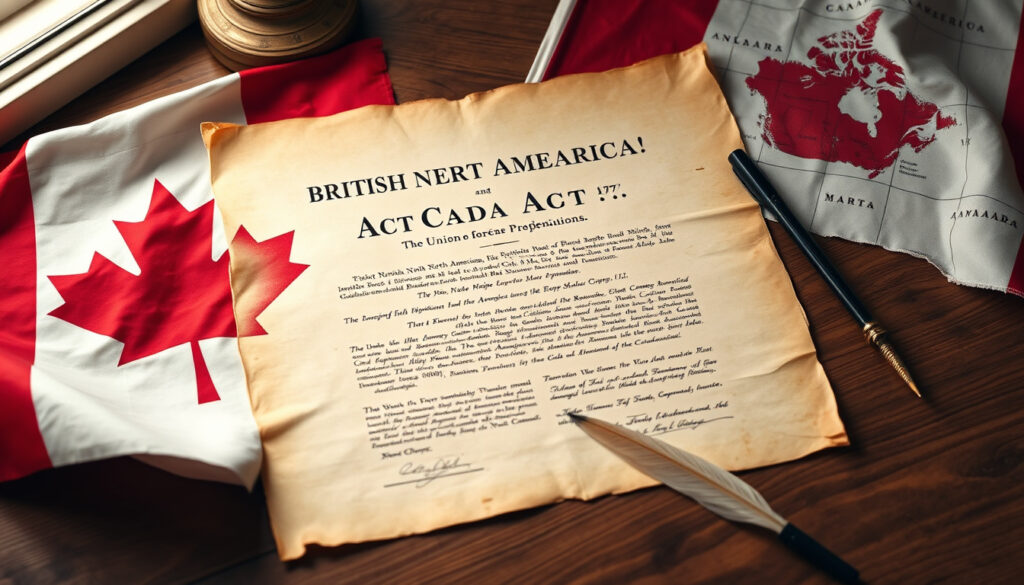
When Was Canada Founded? 1867 Confederation Explained
Ask someone how old Canada is, and you might get a few different answers because the country’s founding wasn't a single moment — it was a process spanning centuries, treaties, and political compromises. This article breaks down the key dates from Confederation in 1867 to full independence in 1982, so you know exactly what each milestone means.
Year of Confederation: 1867 ·
Current age (2025): 158 years ·
Founding provinces: 4 (Ontario, Quebec, New Brunswick, Nova Scotia) ·
Legal document: British North America Act (now Constitution Act, 1867) ·
First European settlement: 1604 (St. Croix Island)
Quick snapshot
- Canada became a self-governing dominion on July 1, 1867 (Encyclopaedia Britannica (established reference work))
- The British North America Act received Royal Assent on March 29, 1867 (Encyclopaedia Britannica)
- Four provinces originally united: Ontario, Quebec, New Brunswick, Nova Scotia (Government of Canada (official history))
- Exact date when Canada became fully independent is debated — some point to 1931, others to 1982 (Encyclopaedia Britannica (independence debate))
- Whether age should count from 1867 or from earlier colonial settlements is open to interpretation (Government of Canada (historical overview))
- The precise role of Indigenous governance before European contact complicates any single “founding” narrative (Government of Canada (official history))
- 1534: Jacques Cartier claims region for France (Encyclopaedia Britannica)
- 1867: Confederation creates Dominion of Canada (Encyclopaedia Britannica (Confederation))
- 1982: Canada Act patriates constitution (Government of Canada)
- Canada continues to evolve its sovereignty with ongoing constitutional debates (Government of Canada (constitutional history))
- Indigenous reconciliation and treaty recognition add future layers to the founding story (Government of Canada (reconciliation))
The table below captures the most commonly cited figures.
| Label | Value |
|---|---|
| Official founding date | July 1, 1867 |
| Founding document | British North America Act, 1867 |
| Head of state at founding | Queen Victoria |
| Original provinces | Ontario, Quebec, New Brunswick, Nova Scotia |
| Current number of provinces and territories | 10 provinces, 3 territories |
When and who founded Canada?
Confederation of 1867
Canada was founded as a federal dominion on July 1, 1867, through the British North America Act, which received Royal Assent on March 29, 1867 (Encyclopaedia Britannica). The act created a confederation from the colonies of Nova Scotia, New Brunswick, and the Province of Canada — the latter split into Ontario and Quebec (Government of Canada (official history)).
Key figures: John A. Macdonald, George-Étienne Cartier
- John A. Macdonald became the first Prime Minister of the Dominion (Encyclopaedia Britannica (biography)).
- George-Étienne Cartier was a central architect of Confederation, advocating for French-Canadian interests (The Canadian Encyclopedia (national reference)).
Earlier settlements and colonies
Before 1867, the region that became Canada included French colonies (New France, 1534–1763), then British colonies after the Treaty of Paris in 1763 (Government of Canada). The first European settlement was at St. Croix Island in 1604, followed by Quebec City in 1608 (Encyclopaedia Britannica (city history)).
Canada’s founding as a dominion meant evolution rather than revolution — a gradual transfer of power from Britain rather than a war of independence.
How old is Canada?
Calculating age from 1867
If measured from Confederation on July 1, 1867, Canada is 158 years old as of 2025 (Encyclopaedia Britannica).
Alternate founding dates (1608, 1763)
- Some historians point to 1608, when Samuel de Champlain founded Quebec City, as the start of continuous European governance (Encyclopaedia Britannica (explorer biography)).
- Others emphasize 1763, when France ceded New France to Britain (Government of Canada).
If you count from the first European settlement (1604), Canada is 421 years old. The answer depends entirely on which milestone you consider the “founding.”
What was Canada called before 1867?
Pre-Confederation names
The region was known collectively as British North America (Government of Canada). The name “Canada” itself became official in 1791 under the Constitutional Act (Government of Canada (name history)).
New France (1534–1763)
From Jacques Cartier’s first voyage in 1534 until the Treaty of Paris in 1763, the territory along the St. Lawrence was a French colony called New France (Encyclopaedia Britannica (colonial history)).
Province of Quebec (1763–1791), Upper and Lower Canada (1791–1841), Province of Canada (1841–1867)
- 1763–1791: British renamed it the Province of Quebec (Government of Canada).
- 1791: The Constitutional Act split it into Upper Canada (English) and Lower Canada (French) (Encyclopaedia Britannica (act history)).
- 1841: The Act of Union merged them into the Province of Canada (The Canadian Encyclopedia).
The pattern: each name reflected a shift in colonial administration, leading to the 1867 compromise that created the Dominion.
When was Canada independent?
Statute of Westminster 1931
Canada gained full legislative independence through the Statute of Westminster in 1931, which removed Britain’s power to legislate for Canada without its consent (Encyclopaedia Britannica (legal history)).
Constitution Act 1982
The Canada Act 1982 (UK) and the Constitution Act, 1982 (Canada) patriated the constitution, giving Canada the power to amend its own constitution without British approval (Government of Canada (constitutional history)).
Foreign affairs and defense control
Even after the Statute of Westminster, Britain retained control over Canada’s foreign affairs and defense until later (e.g., the 1946 Canadian Citizenship Act and 1949 Supreme Court as final appeals court) (Encyclopaedia Britannica (Canadian independence)).
Which is older, the USA or Canada?
Founding dates compared
The United States declared independence on July 4, 1776 (National Archives (primary source)). Canada confederated on July 1, 1867 — 91 years later (Encyclopaedia Britannica).
European settlements pre-date both
Both countries have older European colonial histories: St. Augustine, Florida (1565) is older than any Canadian settlement, but Quebec City (1608) predates English settlements like Jamestown (1607) by one year (Encyclopaedia Britannica).
The USA is older as an independent nation, but Canada’s constitutional evolution avoided the traumas of civil war and revolution — a different path to nationhood.
| Attribute | United States | Canada |
|---|---|---|
| Independence/Confederation date | July 4, 1776 | July 1, 1867 |
| Age in 2025 | 249 years | 158 years |
| Founding document | Declaration of Independence | British North America Act |
| First European settlement | St. Augustine (1565) | St. Croix Island (1604) |
| First constitutional convention | 1787 (Philadelphia) | 1864 (Charlottetown) |
The implication: the US achieved independence earlier, but Canada’s path avoided violent revolution.
Timeline of Canada’s founding
- – Jacques Cartier claims the region for France, naming it Canada (Encyclopaedia Britannica (explorer))
- – Samuel de Champlain founds Quebec City (Encyclopaedia Britannica)
- – Treaty of Paris cedes New France to Britain (Government of Canada)
- – Constitutional Act divides Quebec into Upper and Lower Canada (Encyclopaedia Britannica)
- – Act of Union creates Province of Canada (The Canadian Encyclopedia)
- – Confederation: Dominion of Canada established (Encyclopaedia Britannica)
- – Statute of Westminster grants legislative independence (Encyclopaedia Britannica)
- – Canada Act patriates constitution (Government of Canada)
This timeline shows the gradual accumulation of sovereignty.
What we know and what’s uncertain
Confirmed facts
- Canada became a self-governing dominion on July 1, 1867 (Encyclopaedia Britannica)
- The British North America Act was the legal instrument (Legislative Assembly of BC (official legislative body))
- John A. Macdonald was the first Prime Minister (Encyclopaedia Britannica)
What’s unclear
- Exact date when Canada became fully independent is debated — some say 1931, others 1982 (Encyclopaedia Britannica)
- Whether age should be counted from 1867 or earlier colonial dates is a matter of interpretation
- The precise role of Indigenous governance before European contact complicates any single “founding” narrative
What remains clear is that Canada’s founding is a story of evolution, not revolution.
Perspectives on Canada’s founding
“Canada’s Confederation was a political compromise, not an act of revolution.”
— Historica Canada (national historical organization)
“The Dominion of Canada was created by an act of the British Parliament, but the people of Canada built the nation.”
— Government of Canada, Discover Canada (official citizenship guide)
These perspectives highlight the distinct nature of Canada’s birth.
Why the founding date still matters
Canada’s layered founding — from colonial outpost to confederation to full sovereignty — shapes its national identity today. The choice to measure nationhood from 1867 emphasizes a peaceful, constitutional birth rather than a revolutionary one. For Canadians debating the meaning of their country, the founding date is more than a fact: it’s a statement about values. For immigrants and citizens alike, understanding this layered history means recognizing that Canada’s story is still being written — and the next chapter depends on how we interpret the past. For a deeper look at how provincial leaders have used constitutional tools, see Premiers Using Notwithstanding Clause: History & Examples. Also, recent debates over national unity are echoed in the Alberta Separation Referendum Question – What You Need to Know.
en.wikipedia.org, ebsco.com, youtube.com, historymuseum.ca, leg.bc.ca, historyofrights.ca
For a deeper look at the events leading up to July 1, 1867, see Canadas 1867 Confederation.
Frequently asked questions
Why is Canada Day celebrated on July 1?
July 1 marks the anniversary of the British North America Act taking effect in 1867, creating the Dominion of Canada (Government of Canada (heritage department)).
Was Canada ever a British colony?
Yes, from 1763 to 1867, the region was under British colonial rule, divided into various colonies (Government of Canada).
What were the original four provinces of Canada?
Ontario, Quebec, New Brunswick, and Nova Scotia (Government of Canada).
What is the difference between a dominion and a sovereign state?
A dominion is a self-governing territory within the British Empire that is not fully sovereign; sovereignty came later through the Statute of Westminster (1931) and the Canada Act (1982) (Encyclopaedia Britannica (definition)).
How did Canada get its name?
The name “Canada” likely comes from the Huron-Iroquois word “kanata,” meaning “village” or “settlement.” Jacques Cartier used it to refer to the region near Quebec (Government of Canada).
Did Canada exist before 1867?
As a unified political entity, no. Before 1867, the region consisted of separate British colonies. However, the name “Canada” was used for parts of the territory since the 16th century (Government of Canada).
Is Canada part of the United Kingdom?
No. Canada is an independent country and a constitutional monarchy with the British monarch as head of state. It is not part of the UK (Government of Canada).
More related posts
 Native American Identity: Citizenship, Tribes & Key Facts
 Sylvester Stallone: Biography, Health, Net Worth, Family
 Carrie Coon’s Children, Husband, Sobriety & Career
 Virginia Giuffre: Key Facts, Allegations & Memoir (2025)
 Sharon Osbourne: Health, Marriage, Family, and Latest News
 T20 World Cup 2026 Schedule: Match Dates, Teams & Venues
 How to Press Flowers: 4 Beginner Methods + Expert Tips
 Regina to Quebec City Flights: Airports, Airlines & Tips