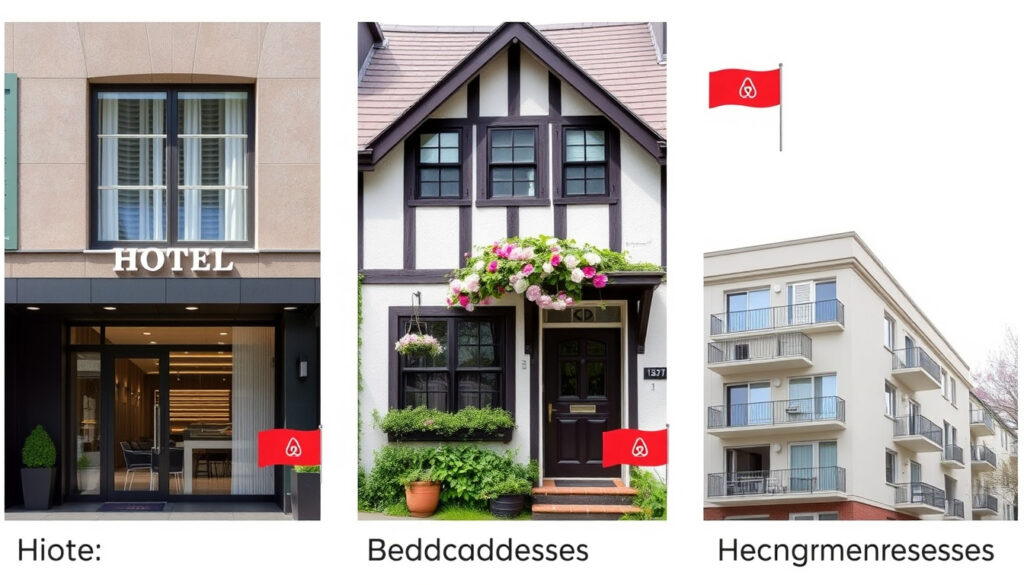
Airbnb vs B&B vs Hotel: Meaning, Downsides & Red Flags
The choice between an Airbnb, a hotel, or a bed and breakfast used to revolve around space versus service, but in 2025, hidden fees and tightening regulations are flipping that equation for savvy travelers.
Founded: 2008 | Global listings: 8 million | Countries available: 220+ | Average daily rate (U.S.): $150–$300
What Is Airbnb?
- Short-term rental platform founded in 2008.
- Offers private rooms, entire homes, and unique stays.
- Available in 220+ countries.
- Listings include entire homes, private rooms, and shared spaces.
Airbnb vs B&B
- B&Bs are small, owner-operated inns with breakfast included.
- Airbnb provides self-catering spaces without standardized meals.
- B&Bs often cheaper for solo travelers; Airbnb better for groups and longer stays.
Airbnb vs Hotel vs Airbnb
- Hotels offer predictable quality, front desk service, and daily housekeeping.
- Airbnb gives space and kitchen, but fees can add up.
- Guest satisfaction has shifted toward hotels for reliability in recent years.
Pros and Cons
- Pro: Unique stays, local experience, kitchen facilities.
- Con: Hidden fees, inconsistent quality, safety concerns.
- Pro: Often cheaper for long stays or long stays or large groups.
What does Airbnb mean?
Origin of the name ‘Airbnb’
Airbnb stands for “Air Bed and Breakfast.” The company was founded in 2008 by Brian Chesky, Joe Gebbia, and Nathan Blecharczyk. The name originates from the founders’ initial concept of renting air mattresses in their living room to conference attendees.
How Airbnb works in simple terms
The platform connects hosts who have space to rent with travelers looking for short-term lodging. Listings range from a single private room to entire homes, treehouses, and villas. Airbnb remains a highly variable product because quality, rules, amenities, and host responsiveness can differ widely from listing to listing.
The implication: Airbnb expanded the definition of lodging, but that flexibility comes with a trade-off in consistency that hotels or B&Bs typically smooth over.
What is the difference between a B&B and Airbnb?
Bed and breakfasts are typically smaller, owner-run lodgings that include breakfast and a more personalized guest experience than chain. Airbnb rentals, by contrast, vary from private rooms to entire homes, often without meals.
Which is right for me: bed and breakfast or Airbnb?
B&Bs offer a more intimate atmosphere with fixed check-in times and direct interaction with the who can provide local recommendations. However, that same intimacy can mean less privacy than a standalone short-term rental or a hotel room corridor. Airbnb provides more flexibility in location and amenities, such as kitchens, and private entrances Airbnb works well for groups or travelers who want to cook their own meals.
The pattern: B&Bs win on personal service and included breakfast, while Airbnb wins on privacy and flexible living spaces for longer stays.
How is Airbnb different from a hotel?
Cost comparison: Airbnb vs hotel
Hotels commonly offer consistent room standards, daily housekeeping, front desk support, and on-site amenities like gyms or pools, which can offset higher base nightly rates. Many hotels also compete on loyalty, elite perks, breakfast bundles, and flexible cancellation rules, which can reduce effective trip cost for frequent travelers.
Services and amenities differences
Airbnb provides unique spaces and often more square footage, including full kitchens. But the value proposition shifts when hidden costs. Airbnb’s platform fee structure can include service fees, cleaning fees, and taxes, meaning the displayed nightly rate may not reflect the final price. Hotels can also have hidden costs such as parking, Wi-Fi, breakfast, resort fees, and late checkout charges. The Federal Trade Commission notes that many hotels charge resort fees or destination fees in addition to the room rate.
“Airbnb’s cleaning fees can be especially significant for short stays, where a fixed fee is spread across only one or two nights.” — Airbnb Help Center
Airbnb vs Hotel: Upsides and Downsides
Upsides
- Unique local experiences and character-filled spaces.
- Kitchen facilities.
- Often cheaper for groups or weeklong stays.
- More square footage and privacy than most hotel rooms.
Downsides
The catch: While a hotel rate is all-inclusive for a standard experience, an Airbnb often layers on fees that can make it, on a per-night basis, substantially more expensive than a comparable hotel room.
What is the downside of doing Airbnb?
Unexpected cleaning fees and hidden charges are top complaints among travelers. Inconsistent quality is a major drawback. Security issues including hidden cameras, scams, or unsafe neighborhoods have been widely reported. Cancellation policies can be strict. Long check-in instructions and rigid house rules—like stripping beds or taking out trash— add friction.
Why are people avoiding Airbnb?
Many travelers now prefer hotels for reliability and customer service. The total cost of an Airbnb often exceeds that of a standard hotel room, without the corresponding 24/7 service. The toll of navigating complex check-in processes and performing chores before checkout has shifted preferences back to traditional lodging.
“The hidden fees, cleaning charges to service fees, have made Airbnb uncompetitive for short stays.” — NerdWallet
What are the advantages of using Airbnb?
For group trips or stays longer than a week, Airbnb can still offer superior value. The kitchen facilities allow travelers to save on dining out. Entire-home rentals provide more of a “local” feel than a standardized hotel corridor. Airbnb offers longer-stay discounts on many listings, making it more attractive for weeklong or monthlong trips than many hotels. ( Airbnb Help
“Hotels offer a predictable experience. You know what you are getting.” — Travelers sharing why they prefer hotels.
The verdict: Travelers are voting with their wallets for predictability, forcing Airbnb to compete harder on total price transparency.
What are red flags for Airbnb guests?
Guests with no reviews or incomplete profiles are high risk. Requests to book outside the platform or pay off-site are scams. Vague or contradictory messages about the trip purpose and extremely last-minute bookings for long stays signal trouble. Hosts should verify guest identity with government ID.
How to screen Airbnb guests and spot problems
- Check for incomplete profiles or incomplete profiles.
- Reject requests to pay outside the platform.
- Be wary of last-minute long bookings.
- Ask for the purpose of the trip if the messaging is vague.
Safety first: Airbnb’s review system is central to trust, but reviews cannot fully substitute for professional hotel oversight or licensing. “,
“datePublished”: “2024-05-24”,
“dateModified”: “2024-05-24”,
“publisher”: {
“@type”: “Organization”,
“Organization”,
“name”: “name”: “CanadianWire.net”,
“logo”: “https://canadianwire.net/logo.png”
},
“mainEntityOfPage”: {
“@type”: “WebPage”,
“@id”: “https://canadianwire.net/airbnb-vs-bb-vs-hotel-meaning-downsides-red-flags-2025”
}
}
pacaso.com, shms.com, gratefulforliving.com, letsroave.com, hsclayhouse.com, engine.com, community.ricksteves.com
More related posts
 Alberta Separation Referendum Question – What You Need to Know
 Joe Siddall: Tragedy, Green Wristband, and Blue Jays Career
 Anne Élisabeth Bossé’s Career, Movies, and TV Shows
 Two and a Half Men: Why Canceled, Cast Deaths & Salaries
 Robert Reich: Biography, Politics, Health, and Family
 Aspen CECCE Login: Step-by-Step Parent Portal Guide
 Alex Rodriguez: Gum Disease, JLo Split, Net Worth & Career
 Bande-Son Originale: Difference Between Score and Soundtrack