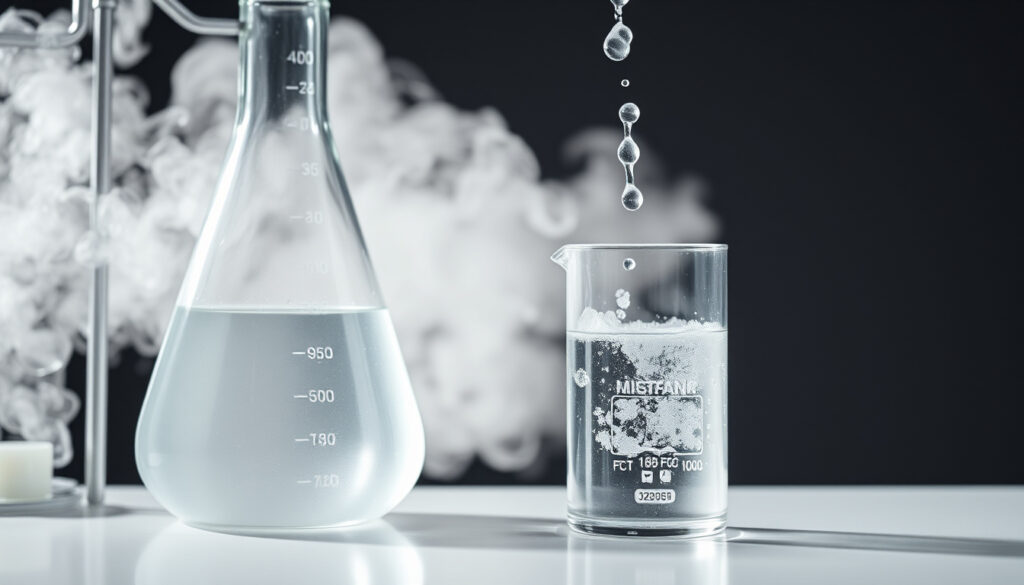
What Is Distilled Water – Definition, Production, Uses
Distilled water is one of the purest forms of water available, produced through a process of heating, evaporation, and condensation that removes virtually all impurities, minerals, and contaminants. Unlike regular tap water, which retains dissolved minerals and ions from its source, distilled water undergoes a transformation that separates pure water molecules from everything else. This makes it uniquely suited for specific applications in laboratories, medical settings, and certain household uses where mineral-free water is essential for proper function and accuracy.
The production process mimics Earth’s natural hydrologic cycle, using phase change to achieve purification that few other methods can match. While many people encounter distilled water in everyday life, questions frequently arise about its safety for drinking, how it differs from other purified waters, and where it is most effectively used. Understanding these aspects helps consumers and professionals make informed decisions about when distilled water is the right choice and when alternative water types might serve better.
What Is Distilled Water?
Distilled water is water that has been purified through heating, evaporation, and condensation to remove nearly all impurities, including minerals, ions, and organic compounds. The result is chemically pure water with an electrical conductivity of about 5 µS/cm and approximately 99.5 percent of impurities removed. While distilled water contains almost no ionic impurities, it may retain gases such as oxygen, nitrogen, and carbon dioxide.
The process mirrors nature’s own water purification system. During boiling, water molecules and contaminants separate; as pure steam rises, it leaves impurities behind, and the steam is then condensed back into liquid form. This fundamental principle has been applied for centuries and remains the most straightforward method for achieving high-purity water.
- Chemical purity: Contains virtually no sodium, calcium, magnesium, or other dissolved inorganic compounds
- Biological safety: Heat inactivates bacteria, viruses, and protozoan cysts during production
- Gases retained: May still contain dissolved oxygen, nitrogen, and carbon dioxide
- Taste profile: Often described as flat due to absence of minerals that give tap water its flavor
- Acidity consideration: Can absorb atmospheric carbon dioxide, potentially becoming slightly acidic over time
- Conductivity: Electrical conductivity of approximately 5 µS/cm makes it suitable for sensitive equipment
| Property | Value | Notes |
|---|---|---|
| Purity Level | 99.5% impurities removed | Most contaminants eliminated |
| Electrical Conductivity | ~5 µS/cm | Very low ion content |
| Minerals | Essentially zero ppm | All dissolved solids removed |
| Biological Contaminants | Inactivated by heat | Bacteria, viruses, cysts destroyed |
| Dissolved Gases | May be present | Oxygen, nitrogen, CO2 possible |
| Boiling Point | 100°C (212°F) | At standard atmospheric pressure |
| Production Time | ~3.5 hours per 3 liters | For household units |
| Maintenance | Regular descaling required | Chamber and condenser buildup |
How Is Distilled Water Made?
The production of distilled water relies on a fundamental principle of physics: when water is heated to its boiling point, it transforms from liquid to vapor, and during this phase change, pure water molecules separate from dissolved impurities that have higher boiling points. This vapor then travels to a cooling area where it condenses back into liquid form, leaving behind all the contaminants that remained in the boiling chamber.
Home Distillation Method
The basic home method involves heating water on a hob or over a fire. You place a small container in a large container of water over your heat source, then position a lid upside down (with the handle facing downward) on the large container. Steam condenses on the underside of the lid and drips into the small container floating in the water. This simple technique demonstrates the core principle of distillation and can produce usable distilled water with basic equipment.
Household Distillers
Household distillers use electric heating elements (though some models use gas heating) in a more controlled and efficient system. The process involves three main stages: heating, condensation, and collection. Water is heated in a lower chamber to produce steam, which travels through a glass or metal condenser tube where it cools and condenses back into liquid. The purified water drips into a collection container, while remaining water in the heating chamber contains dissolved salts and impurities that are drained and discarded.
Distillation takes time because water must be thoroughly boiled to ensure the steam is toxin and contaminant-free. Approximately 3.5 hours may be needed to distill a full 3 liters of water. Regular maintenance, including descaling the chamber and condenser, is necessary for proper operation and to prevent mineral buildup that could affect water quality.
Two basic household designs exist: batch distillers where water is poured directly into the boiling chamber and the unit shuts off when all water is evaporated, and continuous flow distillers that connect to the water supply line with a float valve regulating water level, automatically producing more distilled water as it is used.
Industrial and Multi-Stage Distillation
Industrial facilities use the same principles as home methods but on a much larger scale. Multiple boiling chambers operate at different pressures, with steam from the highest-pressure chamber moving sequentially through lower-pressure chambers in a continuous process, eventually flowing to a clean container. This multi-stage approach increases efficiency and purity.
For laboratory and highly demanding applications, distilled water can undergo multiple distillation cycles for increased purity. Single distillation is the basic version, suitable for daily lab tasks like rinsing glassware. Double distillation removes volatile impurities that may have carried over in the first cycle, resulting in much purer water. Triple distillation achieves the highest purity standard, necessary for the most sensitive analytical and biological experiments.
Is Distilled Water Safe to Drink?
Distilled water is generally considered safe to drink. The process removes virtually all contaminants that could pose health risks, including harmful bacteria, viruses, and chemical impurities. Unlike some water sources that may contain pathogens or pollutants, properly produced distilled water is biologically and chemically pure.
Health Benefits and Risks
The safety of drinking distilled water depends largely on how it is produced and stored. Contamination can occur if the distillation process is incomplete or if the collected water is stored in non-sterile containers. However, when produced correctly, distilled water contains no harmful substances and poses no acute health risks from contamination.
One consideration for those who drink distilled water regularly involves mineral content. Because distillation removes nearly all dissolved minerals, including beneficial ones like calcium and magnesium, people who consume only distilled water may want to ensure they obtain these essential nutrients from other dietary sources. The World Health Organization has noted that while distilled water is safe to drink, those who rely exclusively on it should pay attention to their overall mineral intake.
The absence of minerals in distilled water means it lacks the electrolytes that some other water sources provide. For most people, this has no practical impact on hydration, as minerals can be obtained through food. Those following very restricted diets may want to consider this factor.
The taste of distilled water is often described as flat or dull compared to tap water, which typically contains dissolved minerals that contribute to flavor. This is not a safety concern but rather a matter of personal preference. Some people find the taste unappealing, which can affect how much water they drink.
It is worth noting that while no strong scientific evidence indicates distilled water causes harm when consumed, questions remain about long-term effects of drinking exclusively demineralized water. Most health authorities consider occasional or even regular consumption safe for healthy individuals, provided overall dietary mineral intake is adequate.
Distilled Water vs. Other Types of Water
Understanding how distilled water compares to other purified water types helps consumers and professionals choose the right product for their needs. Each treatment method has distinct characteristics that make it suitable for different applications.
Vs. Purified Water
Distilled water differs from purified water in fundamental ways. Purified water uses various filtration methods including reverse osmosis, deionization, activated carbon, or UV treatment to eliminate specific contaminants, but it does not necessarily remove all dissolved solids the way distillation does. Distillation uses phase change to eliminate nearly all impurities and pathogens, making it one of the most comprehensive purification methods available.
Tap water is sourced from natural bodies like rivers or groundwater and undergoes municipal treatment including filtration and disinfection, often with chlorine or chloramine added. In contrast, distilled water results from boiling and condensing steam, removing virtually all impurities and contaminants that remain in tap water.
Vs. Deionized Water
Deionized water removes ions through ion exchange, swapping charged particles like minerals for hydrogen and hydroxyl ions. While deionization excels at removing ionic contaminants, it struggles with non-ionic substances and pathogens that distillation handles effectively. Reverse osmosis uses semipermeable membranes to filter water, achieving around 95 percent impurity removal compared to distillation’s 99.5 percent or higher.
The critical difference is that distillation’s high heat eliminates biological contaminants including bacteria, viruses, and cysts, whereas membrane-based methods cannot guarantee this. Each method has strengths: distillation produces chemically pure water ideal for laboratories and medical devices, deionization creates ion-free water suited for electronics and pharmaceuticals, and reverse osmosis delivers affordable purification for drinking water.
Distillation, deionization, and reverse osmosis are not interchangeable processes. Selecting the right method depends on the specific application and required purity standards. For general household drinking water, reverse osmosis or filtered tap water is often sufficient. For laboratory work or medical equipment, distillation provides the highest reliability.
Common Uses for Distilled Water
The unique properties of distilled water make it essential for specific applications where mineral-free water produces better outcomes. Understanding these uses helps explain why distillation remains relevant despite newer filtration technologies.
Household Applications
At home, distilled water is primarily used for car maintenance and sometimes for humidifiers and steam irons. Using distilled water in car batteries extends their lifespan by preventing mineral buildup on the lead plates. Steam irons and humidifiers benefit similarly, as mineral-free water reduces scale deposits that can damage heating elements and reduce efficiency.
It is rarely used for drinking or cooking due to its specific taste caused by low mineralization. Many people find the flat flavor unappealing, and the lack of minerals means missing out of the small amounts that tap water contributes to dietary intake.
Industrial Applications
Industrial and commercial applications represent significant uses for distilled water. It is used in chemical technology, the pharmaceutical industry, and the food industry. In these settings, the absence of impurities prevents contamination, reactions with other chemicals, and equipment damage that minerals could cause.
Laboratory use particularly depends on distilled water. Tap water contains impurities that can ruin experiments, damage equipment, and lead to inaccurate results. Scientific research requires consistent, predictable water quality that only highly purified water can provide.
Plants and Batteries
For plants, the picture is nuanced. While plants need water to survive, the minerals in tap water are often beneficial for growth. Distilled water lacks these nutrients, meaning plants watered exclusively with distilled water may require fertilizer to compensate. However, using distilled water can help avoid issues with high mineral content in tap water in some areas.
For batteries, distilled water is often recommended for maintenance of lead-acid batteries, including car batteries. The minerals in regular water can accumulate on battery plates, reducing capacity and lifespan over time. Topping off batteries with distilled water helps maintain proper function and extends service life.
A Brief History of Distillation
The practice of distillation has ancient origins and has evolved significantly over centuries to become the sophisticated process used today. Understanding this history provides context for how distillation became an essential technology.
- – Aristotle described early distillation methods, using them for purposes beyond water purification
- – European alchemists refined distillation techniques, primarily for producing spirits and perfumes
- – Laboratories began requiring highly purified water for scientific work, prompting development of standardized distillation equipment
- – Distilled water is widely available as a bottled consumer product and remains essential for medical devices and laboratory work
What Is Known and What Remains Unclear
When examining distilled water, it helps to distinguish between established facts and areas where uncertainty remains. This clarity assists consumers in making informed decisions.
- Distillation removes approximately 99.5% of impurities
- The process eliminates biological contaminants including bacteria, viruses, and protozoan cysts
- Industrial applications include chemical technology, pharmaceuticals, and food production
- Household uses primarily involve car maintenance, humidifiers, and steam irons
- Production methods range from simple home techniques to complex multi-stage industrial systems
- Long-term health effects from exclusive consumption of distilled water are not fully established
- The environmental impact of large-scale distillation production requires more comprehensive study
- Optimal storage conditions and shelf life under various circumstances need additional research
- Specific health outcomes from mineral replacement when switching to distilled water vary by individual
Water Science in Context
Water purification represents one of humanity’s most important technological achievements, and distillation stands as its foundational method. From ancient times when people first observed steam rising and condensing back to liquid, through the development of sophisticated laboratory equipment, to modern industrial facilities producing millions of gallons annually, the core principle has remained remarkably consistent.
The significance of high-purity water extends beyond convenience. In medical settings, contaminated water can introduce pathogens or interfere with medications. In laboratories, trace impurities can invalidate years of research. In industrial applications, mineral deposits can cause equipment failure. These consequences explain why distillation continues to be used despite the availability of alternative purification methods.
For the average person, understanding water types helps in making practical decisions. While tap water is perfectly adequate for most daily activities, specific situations call for higher purity levels. Knowing when and why to choose distilled water versus other options ensures both optimal results and sensible resource use.
Sources and Expert Perspectives
Various organizations and scientific sources have examined water purification methods and their applications. The Environmental Protection Agency provides guidance on water quality standards and acknowledges distillation as producing high-purity water suitable for various applications. The World Health Organization has considered the health aspects of consuming demineralized water, noting that while it is safe, those who rely exclusively on such water should monitor their overall mineral intake.
The World Health Organization notes that water lacking in minerals may not be the optimal drinking water from a health perspective, and those consuming exclusively demineralized water should ensure adequate mineral intake through other dietary sources.
University extension programs and water treatment specialists have documented the technical aspects of distillation, including the three-stage process of heating, condensation, and collection. These sources emphasize that distillation removes nearly all impurities including sodium, hardness compounds, and other dissolved inorganic compounds, while the heat inactivates bacteria, viruses, and protozoan cysts.
Research institutions confirm that the distillation process takes considerable time, with approximately 3.5 hours typically required to distill a full 3 liters of water, and that regular maintenance including descaling is necessary for proper operation.
These authoritative sources establish distillation as a scientifically validated purification method with specific advantages over other approaches. The choice to use distilled water should consider both its benefits for particular applications and practical factors such as production time, maintenance requirements, and cost.
Key Takeaways
Distilled water represents the purest commonly available form of water, produced through a time-tested process of boiling and condensation that removes virtually all impurities. Its lack of minerals and contaminants makes it ideal for laboratory work, medical devices, and certain household applications where mineral buildup could cause problems. While generally safe to drink, its flat taste and absence of beneficial minerals make it less appealing for everyday hydration compared to properly treated tap water.
For those considering whether to use distilled water, the decision should be guided by specific needs. Laboratory and medical applications clearly benefit from its high purity. Household uses like car batteries and steam irons gain practical advantages from mineral-free water. For drinking, most people will find properly filtered tap water perfectly adequate, though distilled water remains a viable option for those who prefer it.
What is the pH of distilled water?
Distilled water typically has a pH around 7, which is considered neutral. However, it can absorb carbon dioxide from the air over time, potentially becoming slightly acidic. Freshly distilled water stored in sealed containers maintains its neutral pH longer.
Can plants grow in distilled water?
Plants can survive in distilled water, but they may not thrive without additional nutrients. The minerals normally found in tap water are beneficial for plant growth, so using only distilled water typically requires adding fertilizer to provide essential nutrients that the water no longer supplies.
Why is distilled water used in steam irons?
Steam irons benefit from distilled water because mineral-free water prevents scale buildup on heating elements and steam vents. Minerals in tap water can accumulate as deposits that reduce iron efficiency, cause discoloration on fabrics, and eventually damage the appliance.
How long does it take to make distilled water at home?
For household distillers, approximately 3.5 hours may be needed to distill a full 3 liters of water. The exact time depends on the unit’s capacity and heating power, with larger volumes requiring proportionally longer processing times.
Does distilled water expire?
Distilled water itself remains stable indefinitely when stored properly in clean, sealed containers. However, it can absorb gases and contaminants from the air over time, and should be stored in clean containers away from strong odors or chemical fumes to maintain its purity.
More related posts
 Lorenzo Lamas Biography, Net Worth, and Current Life
 Liverpool FC vs AFC Bournemouth Lineups Today: Confirmed XI
 How Old Is the New Pope – Leo XIV Is 69 Years Old
 Club Med Punta Cana Review: Worth It in 2025
 Marc-Andre Fleury: Bio, Stanley Cups & Retirement
 Best AI to Human Text Converter: Free Tools and Guides
 Heather Graham: Age, Relationships, Movies & Beauty Secrets
 Tournoi Roland Garros 2025: Winner, Final, Tickets & Schedule