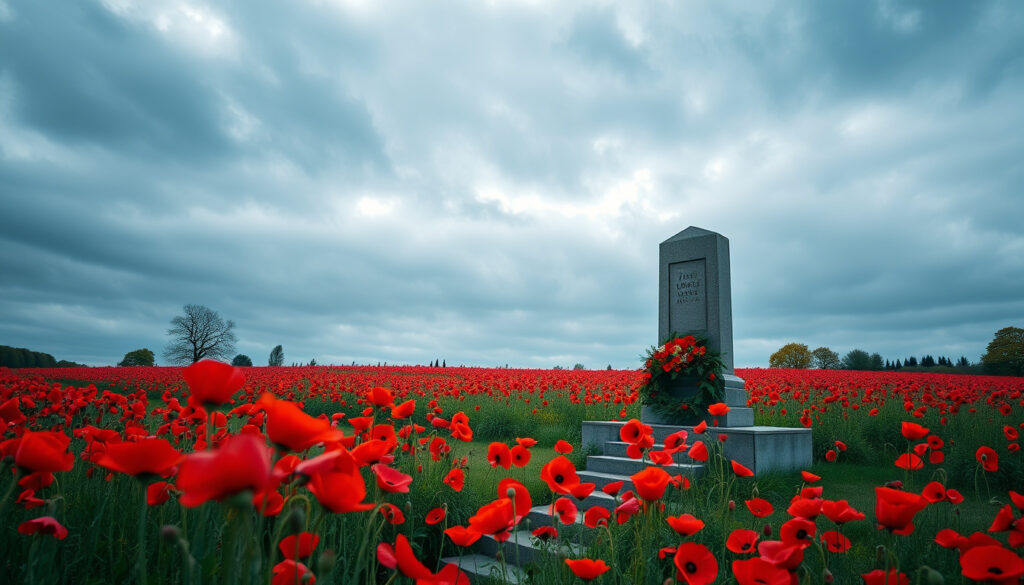
When Is Remembrance Day? Date, History & Traditions
Most people know Remembrance Day falls in November, but fewer could tell you exactly why the date was chosen—or that the silence itself almost didn’t happen. The two-minute pause at the eleventh hour of the eleventh day of the eleventh month traces back to a 1919 request by King George V, who wanted a way to grieve together without the noise of ceremony. A century later, the ritual still forces a national exhale.
Date: 11 November · Origin: 1918 Armistice · Silence: 2 minutes at 11am · Symbol: Poppy · UK Sunday: Second Sunday in November
Quick snapshot
- Date fixed at 11 November from 1918 armistice (Royal British Legion)
- 2-minute silence standard observed at 11am (Australian Army)
- Poppy is the primary symbol of remembrance in UK and Commonwealth (Royal British Legion)
- Individual reasons for poppy refusal vary and often reflect personal or political beliefs rather than a unified stance
- Royal poppy customs have no formal written protocol—decisions appear to be personal
- 1918: Armistice ends WWI at 11am on 11 November
- 1919: First two-minute silence observed on the anniversary
- 1945: Silence moved to Sunday before the 11th as Remembrance Sunday
- 1995: British Legion campaigned to restore the 11 November silence
- Remembrance Day 2026: Tuesday, 11 November
- Remembrance Sunday 2026: Sunday, 8 November
- Both observances will include the 11am silence at cenotaphs and war memorials worldwide
| Detail | Value | Source |
|---|---|---|
| Official Date | 11 November annually | Royal British Legion |
| Start Year | 1919 | Blesma |
| Silence Time | 11:00 AM | Royal British Legion |
| Duration | 2 minutes | Australian Army |
| Primary Symbol | Remembrance poppy | Royal British Legion |
Why is Remembrance Day on November 11?
The date is not arbitrary. World War I hostilities ended at the eleventh hour of the eleventh day of the eleventh month in 1918—a coincidence that felt significant enough to the British government that it became the anchor for every subsequent observance (Blesma). The two-minute silence was announced by King George V on November 7, 1919, just four days before the first anniversary of the armistice (Open University). The king asked that “a complete suspension of all our normal activities be observed for two minutes at the eleventh hour of the eleventh day of the eleventh month” (Australian Army). The timing at 11am mirrors the moment the guns fell silent across the Western Front.
Significance of 11am
- The silence at 11am directly commemorates the moment WWI officially ended
- Two minutes was chosen to allow people to pause without the ceremony becoming performative
- The ritual spread quickly across the British Empire in 1919
The implication: the silence works precisely because it demands nothing from you except stillness—a rare thing in wartime and in peacetime alike.
Is Remembrance Sunday before or after the 11th?
Remembrance Sunday always falls on the second Sunday in November, which means it is sometimes before the 11th and sometimes after. When the 11th itself falls on a Sunday, that day serves double duty—Remembrance Day and Remembrance Sunday merge into one observance with a full national ceremony at the Cenotaph in London (Blesma). The shift to Sunday began in 1945, when the silence was moved to the Sunday before Armistice Day to allow wider participation as wartime restrictions eased (Open University). In 1995, the Royal British Legion successfully campaigned to bring the 11 November silence back alongside the Sunday observance (Open University).
Difference between Remembrance Day and Sunday
- Remembrance Day (11 November): fixed date, solemn silence at 11am, optional observance
- Remembrance Sunday: second Sunday in November, Cenotaph ceremony with national parades, wider attendance
The pattern: UK commemoration has evolved from a single date into a weekend framework that accommodates both official ceremony and personal reflection.
What is Remembrance Day in the USA?
The United States observes November 11 as Veterans Day, a holiday that traces its roots to the same 1918 armistice but has since diverged in purpose. While Remembrance Day in the UK and Commonwealth focuses on honoring the fallen, Veterans Day in the USA honors all who served in the military—not just those who died (USO). Congress first called for annual Armistice Day observance in 1926, and it became a federal holiday in 1938 (USO). In 1954, President Eisenhower renamed it Veterans Day to broaden its scope beyond World War I remembrance (Nevada Veterans). There is no mandated two-minute silence in the USA—parades and public events fill the day instead.
The USA has a separate Memorial Day (last Monday in May) that specifically honors those who died in service—a distinction veterans’ organizations say is often misunderstood by the public. Memorial Day traces back to Decoration Day, first nationally observed on May 30, 1868 (USO).
Similarities and differences
- Veterans Day and Remembrance Day share the same date (November 11) but different purposes
- Neither the USA nor the UK/Commonwealth mandates the two-minute silence in law—it relies on voluntary participation
- The USA observes a National Moment of Remembrance at 3pm on Memorial Day, not Veterans Day
What this means: for Americans traveling to the UK or Commonwealth during November, showing up to a local ceremony unprompted is the clearest form of respect—you don’t need a poppy to stand in silence.
Why don’t Catholics wear poppies?
The refusal to wear a poppy among some Catholics—particularly in Ireland—stems from the symbol’s historical association with British military forces, not from any theological objection. In Ireland, the poppy became linked with British imperialism during centuries of colonial rule, and the IRA famously banned the symbol during the Troubles as a political statement (BBC). Today, some Catholics skip the poppy not out of disrespect for the dead but as a statement against the British military’s role in Irish history—a distinction that often gets lost in public debate. Other individuals simply find the commercialization of the poppy (now sold in many forms beyond the traditional paper flower) uncomfortable. The Royal British Legion, the primary distributor, reports that poppy-wearing remains widespread across the UK and Commonwealth but acknowledges that no one is obligated to participate.
In 2023, some UK politicians publicly debated whether public figures wearing multiple poppies (as Catherine, Princess of Wales, has done) signals additional remembrance or distracts from the symbol’s meaning. The Royal British Legion has never issued guidance on the practice—the choice remains personal.
Historical associations
- The poppy’s connection to WWI fields of battle makes it potent for military remembrance but alienating for communities with anti-British sentiments
- In Northern Ireland, wearing a poppy remains politically charged in ways it is not in England or Scotland
- The symbolism shifts depending on who is looking at it
Modern debates
- Some argue the poppy has become too commercialized and diluted
- Others view any public debate about the symbol itself as a distraction from the dead
- The conversation tends to intensify when public figures choose how many poppies to wear
How is Remembrance Day celebrated?
The core ritual is the two-minute silence at 11am, held at war memorials, churches, schools, and public spaces across the UK and Commonwealth. The ceremony at the Cenotaph in London draws thousands of veterans, politicians, and royals for a wreath-laying service that is broadcast live on BBC television. Outside the UK, Australia holds silence ceremonies that include nightly rituals at leagues clubs—a local variation that has kept the observance embedded in community life for over a century (Australian Army). Canada observes Remembrance Day with similar ceremonies, while New Zealand marks ANZAC Day (April 25) more prominently for its own war dead.
2-minute silence
- Takes place at 11am on 11 November and again on Remembrance Sunday
- Banks, broadcasters, and public institutions pause operations voluntarily
- The silence is observed at war memorials and cenotaphs in cities, towns, and villages nationwide
Poppy wearing traditions
- Poppies are typically worn from late October through 11 November
- The Royal British Legion distributes paper poppies and receives donations in return
- Some people pin multiple poppies to honor family members who served in different conflicts
Services and events
- National ceremony at the Cenotaph: the largest and most televised event
- Local ceremonies at war memorials: organized by British Legion branches and local councils
- School assemblies: children read poems and observe the silence
- Church services: included in regular Sunday worship on Remembrance Sunday
Why this matters: the silence only works if enough people observe it together. The ritual’s power is collective—if you stand in a busy street at 11am on 11 November, you will notice others stopping too.
Timeline
Key dates anchor the evolution of remembrance observances from the end of WWI through modern times.
| Date | Event | Source |
|---|---|---|
| 11 November 1919 | WWI Armistice ends hostilities at 11am | Royal British Legion |
| 11 November 1919 | First two-minute silence observed in London and across the Empire | Australian Army |
| 1921 | Unknown Warrior buried at Westminster Abbey; artificial poppies introduced to fund veterans’ welfare | Open University |
| 1945 | Two-minute silence moved to Sunday before Armistice Day, establishing Remembrance Sunday | Open University |
| 1995 | Royal British Legion campaigns to restore 11 November silence alongside Remembrance Sunday | Open University |
Confirmed
- Date fixed at 11 November from 1918 armistice
- 2-minute silence at 11am is the standard observance
- Remembrance Sunday established in UK since 1945
- Poppy is the primary remembrance symbol in UK/Commonwealth
- Veterans Day in the USA honors all who served, not only the fallen
Unclear or debated
- Individual reasons for refusing to wear a poppy vary by personal and political history
- Royal family customs around multiple poppies have no formal written protocol
- Global observance variations beyond UK, Australia, Canada are not systematically tracked
Voices
“a complete suspension of all our normal activities be observed for two minutes at the eleventh hour of the eleventh day of the eleventh month”
— King George V, Monarch, speaking in 1919 (Australian Army)
“At noon each day, all work, all talk and all movement were suspended for three minutes that we might concentrate as one in thinking of those – the living and the dead”
— Sir Percy Fitzpatrick, High Commissioner of South Africa, originator of the silence idea (Open University)
“It is important to remember the true reason behind the holiday weekend – Memorial Day is a time to reflect on the lives of the men and women of this country who were willing to make the ultimate sacrifice”
— USO, Organization (USO)
The implication: the way a country remembers its war dead tells you something about what it values—and what it wants to forget. The two-minute silence works because it asks for nothing except your presence for 120 seconds. In an era of performative politics, that minimalism is its own kind of radical.
Related reading: How Old Is the New Pope · Where Is Yosemite National Park
Australia and New Zealand honor fallen soldiers through Anzac Day date and history, featuring dawn services akin to Remembrance Sunday’s reflective silences.
Frequently asked questions
What time is Remembrance Day?
The two-minute silence takes place at 11am on 11 November and again at 11am on Remembrance Sunday. That timing directly corresponds to the moment the WWI armistice took effect in 1918.
When did Remembrance Day start?
The first two-minute silence was observed on 11 November 1919—exactly one year after the WWI armistice. King George V announced the ceremony just days before, asking the public to pause in memory of the fallen.
When to wear a poppy pin?
Most people begin wearing a poppy in late October and continue through 11 November. The Royal British Legion sells poppies from late October, with proceeds supporting veterans and their families.
Why are there two Remembrance days?
Remembrance Day on 11 November is the fixed annual date. Remembrance Sunday, the second Sunday in November, was added in 1945 to allow a larger public ceremony at the Cenotaph when wartime restrictions made the 11th difficult to observe.
Is Remembrance Day just a British thing?
No—the Commonwealth observes it, including Canada, Australia, and New Zealand. The USA marks the same date as Veterans Day, though the purpose is broader (honoring all veterans, not just the fallen) and there is no mandated silence.
Why does Kate Middleton wear three poppies?
The Royal British Legion has never issued guidance on how many poppies to wear. Royal family members typically choose the number themselves, with multiple poppies appearing to be a personal choice rather than protocol. Some interpret it as honoring family members who served in different conflicts.
What time is the 2 minute silence today?
11am on 11 November and 11am on Remembrance Sunday. The silence lasts exactly two minutes. In the UK, broadcasters, train stations, and many workplaces pause at that moment voluntarily.