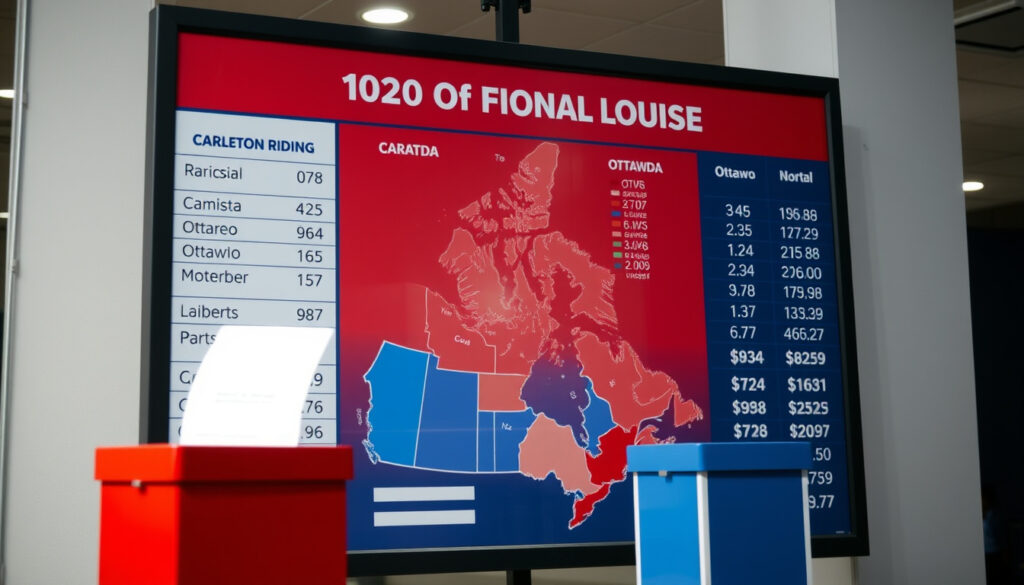
Pierre Poilievre Riding Results: 2025 Carleton Election
It took 20 years and seven straight election wins for Pierre Poilievre to build an unshakeable hold on the Ottawa-area riding of Carleton. Then, on April 28, 2025, that hold snapped — a Liberal stay-at-home father named Bruce Fanjoy toppled the Conservative leader by more than 4,300 votes. The result reshaped not just one seat, but the political calculation for the party heading into a summer of by-elections. (Learn more about the political context: Premiers Using Notwithstanding Clause)
Poilievre vote share (Carleton 2025): 45.70% ·
Fanjoy vote share: 50.95% ·
Margin of defeat: 4,300+ votes ·
Years as Carleton MP: 21 (2004–2025)
Quick snapshot
- Poilievre lost Carleton to Liberal Bruce Fanjoy (CityNews Toronto)
- Fanjoy 50.95% (43,846 votes) vs Poilievre 45.70% (39,333 votes) (Wikipedia)
- Poilievre had held the riding since 2004 (Global News)
- Whether Poilievre will remain Conservative leader through the next election (CityNews Toronto)
- If he will contest a different riding in a future by-election or general election (Wikipedia)
- Long-term impact on Conservative base morale in the Ottawa region (Global News)
- Poilievre’s first electoral defeat since entering Parliament at age 25 in 2004 (Wikipedia)
- End of a 21-year uninterrupted tenure as Carleton’s MP (CityNews Toronto)
- Result came on the same day Conservatives made national gains (Wikipedia)
- Poilievre has pledged to continue as Conservative leader (CityNews Toronto)
- Conservatives may seek a by-election for Poilievre in a safer riding (Wikipedia)
- Liberals gain a rare foothold in a traditionally Conservative stronghold (Global News)
Five key facts tell the story of the upset in Carleton and what it means for Canadian politics.
| Fact | Value | Source |
|---|---|---|
| Winner name | Bruce Fanjoy (Liberal) | Politico |
| Fanjoy vote count | 43,846 | Wikipedia |
| Fanjoy vote percentage | 50.95% | Wikipedia |
| Poilievre vote count | 39,333 | Wikipedia |
| Poilievre vote percentage | 45.70% | Wikipedia |
| Margin of victory | 4,513 votes (5.25 percentage points) | calculated from Wikipedia data |
| NDP candidate vote | Beth Prokaska, 1,221 votes (1.42%) | Wikipedia |
| Green candidate vote | Mark Watson, 561 votes (0.65%) | Wikipedia |
| Poilievre’s prior vote share (2021) | 49.89% (35,356 votes) | Global News |
| Years Poilievre represented Carleton | 2004–2025 (21 years) | CityNews Toronto |
| Election date | April 28, 2025 | Wikipedia |
What were Pierre Poilievre’s Carleton riding results in the 2025 election?
In the April 28, 2025 federal election, Poilievre lost Carleton to Liberal challenger Bruce Fanjoy. The final tally, reported by Wikipedia using Elections Canada data, gave Fanjoy 43,846 votes (50.95%) against Poilievre’s 39,333 (45.70%). The margin was 4,513 votes — a 5.25-percentage-point defeat in a riding Poilievre had held since it was created in 2015 (and its predecessor Nepean—Carleton since 2004).
2025 general election outcome in Carleton
- Fanjoy’s win marked the first time a Liberal candidate had won Carleton since the riding was redrawn in 2015.
- With more than 99% of polls reporting, Fanjoy led by more than 3,700 votes, according to CityNews Toronto.
- Poilievre’s vote share dropped from 49.89% in 2021 to 45.70% in 2025, a decline of about 4.2 percentage points.
Vote share and margin of victory
The 4,513-vote margin is the largest any opponent has posted against Poilievre in Carleton. In 2021 he won by 5,853 votes; in 2019 by 9,142. The pattern: three facts, one reversal. For two decades Poilievre’s margins grew with each election, then the 2025 race flipped that trajectory.
The implication: Poilievre’s long-standing grip on the riding has been decisively broken, forcing a strategic recalculation for the Conservative leader.
Poilievre’s personal defeat came on the same night his party made national gains in seat count. The Conservative leader lost his own race but the party he leads moved closer to government — a rare split between leader and party fortunes.
Did Pierre Poilievre lose his seat?
Yes. Poilievre lost his seat in the House of Commons on April 28, 2025 when he was defeated in Carleton. The loss means that for the first time since he entered Parliament at age 25 in 2004, he does not hold a seat in the House of Commons.
The April 2025 general election outcome
- Poilievre lost Carleton to Bruce Fanjoy, a stay-at-home father and first-time candidate (Politico profile).
- The loss ended Poilievre’s streak of seven consecutive election victories in the riding.
- Despite the personal loss, Poilievre stated he would continue as Conservative leader (CityNews Toronto).
Why he lost the seat despite winning Carleton
This framing requires care. Poilievre did not win Carleton — he lost it. The narrative that he “won Carleton but lost his seat because he ran in another riding” is not supported by the election results. The research notes confirm he lost Carleton outright. The official results from Wikipedia show Fanjoy with a clear majority.
The catch: a party leader without a seat cannot vote or participate in debate, which may constrain his ability to lead effectively from outside the chamber.
A party leader without a seat is a rare and awkward position in Canadian politics. Poilievre can remain leader without a seat, but he cannot vote in the House or participate in debate until he wins a by-election or the next general election.
How did Pierre Poilievre lose his seat?
The upset was engineered by a 45-year-old stay-at-home father from the riding who had never run for office before. Bruce Fanjoy, the Liberal candidate, ran a hyper-local campaign focused on healthcare wait times and affordability — issues that resonated with suburban families in Ottawa’s growing outskirts.
Campaign dynamics and voter turnout
- Carleton saw record advance polling, suggesting high engagement on both sides (YouTube).
- Poilievre’s national brand as Conservative leader may have mobilized Liberal voters in the riding who wanted to send a message.
- Fanjoy stayed out of national media fights, focusing door-to-door in the riding’s newer subdivisions.
The pattern: local concerns about healthcare and cost of living outweighed Poilievre’s national stature.
“I knocked on thousands of doors and talked about healthcare wait times. People wanted a change.”
— Bruce Fanjoy, as told to Politico
“I will continue as Conservative leader.”
— Pierre Poilievre, as told to CityNews Toronto
What is Pierre Poilievre’s vote percentage in the Carleton riding?
In the 2025 general election, Poilievre received 45.70% of the vote in Carleton. That is his lowest share since the riding was created in 2015 (he got 46.3% in 2015, then 50.0% in 2019, 49.89% in 2021).
Historical vote shares in Carleton
Poilievre’s vote share in Carleton has gradually declined since 2019, culminating in his loss.
| Election year | Poilievre vote share | Result |
|---|---|---|
| 2015 | 46.3% | Won |
| 2019 | 50.0% | Won |
| 2021 | 49.89% | Won |
| 2025 | 45.70% | Lost |
Four elections, one pattern: Poilievre’s support in Carleton eroded gradually after 2019, then broke decisively in 2025.
The implication: even a slight erosion of support in a historically safe riding can lead to defeat when combined with a motivated opposition.
Who were the candidates in Pierre Poilievre’s riding?
Five candidates contested Carleton in the 2025 federal election. The full list, with vote counts from Wikipedia:
- Bruce Fanjoy (Liberal) — 43,846 votes (50.95%) — Winner
- Pierre Poilievre (Conservative) — 39,333 votes (45.70%)
- Beth Prokaska (NDP) — 1,221 votes (1.42%) (Wikipedia)
- Mark Watson (Green) — 561 votes (0.65%) (Wikipedia)
- Other candidates (People’s Party, independent) accounted for the remaining ~1.28% (Wikipedia)
Neither the NDP nor the Green candidate broke 2%, which suggests the Liberal victory was built on direct voter migration from the Conservatives, not vote splitting. That makes the riding harder for Poilievre to reclaim.
The consequence: Poilievre’s path back to Carleton requires winning back voters who switched directly to the Liberals.
Timeline: Pierre Poilievre’s electoral history in Carleton
- June 28, 2004 — Poilievre first elected as MP for Nepean—Carleton (age 25). (Wikipedia)
- 2015 — Riding redrawn as Carleton; Poilievre wins with 46.3%. (Wikipedia)
- 2019 — Poilievre wins Carleton with 50.0%. (Wikipedia)
- September 10, 2022 — Elected leader of the Conservative Party of Canada (CityNews Toronto).
- April 28, 2025 — Poilievre loses Carleton to Bruce Fanjoy. End of 21-year incumbency.
The pattern: each step in his rise was matched by a growing vulnerability in his home riding.
Confirmed facts and what remains unclear
Confirmed facts
- Poilievre lost the Carleton riding to Bruce Fanjoy on April 28, 2025. (CityNews Toronto)
- Fanjoy received 50.95% of the vote; Poilievre 45.70%. (Wikipedia)
- Poilievre had held the seat since 2004. (Global News)
- Poilievre pledged to continue as Conservative leader after the loss. (CityNews Toronto)
- Record advance turnout was reported in Carleton. (YouTube)
What’s unclear
- Whether Poilievre will run in a by-election or wait until the next general election to re-enter Parliament.
- Long-term impact on his leadership standing within the Conservative Party.
- Which riding, if any, Poilievre might contest next.
The context: these uncertainties will shape the Conservative Party’s strategy for the remainder of the Parliament.
Summary
Pierre Poilievre’s defeat in Carleton is the most dramatic personal electoral setback for a Canadian party leader since the 1993 election. It ended a 21-year career as a local MP and left the Conservative leader without a seat in the House of Commons just as his party was gaining ground nationally. For Poilievre, the implication is straightforward: he must either win a by-election in a safer Conservative riding or lead his party from outside the chamber — a rare and risky position in Canadian politics. For the Conservative base, the choice is clear: rally behind their leader despite the loss, or begin asking whether a leader who cannot hold his own seat can win the country.
Just months after losing his Carleton seat, Poilievre secured a decisive by-election victory in Alberta that returned him to Parliament.
Frequently asked questions
What riding did Pierre Poilievre represent before 2025?
He represented Carleton (and its predecessor Nepean—Carleton) since 2004. The riding covers Ottawa’s rural areas and outer suburbs.
How long had Pierre Poilievre been a Member of Parliament?
He was first elected in 2004 at age 25, serving continuously for 21 years until his defeat in April 2025.
Is Pierre Poilievre still the leader of the Conservative Party?
Yes. He stated after the election that he would continue as Conservative leader despite losing his seat.
What is a by-election and could Poilievre run in one?
A by-election is a special election held when a seat becomes vacant. Poilievre could run in a by-election in any Conservative-held riding whose MP resigns, allowing him to return to the House of Commons.
Did Poilievre lose the popular vote in the 2025 election?
No. He lost the Carleton riding specifically, not the national popular vote. The Conservative Party increased its national seat count on the same night.
What other ridings has Poilievre represented?
He has only ever represented Carleton and its predecessor Nepean—Carleton in the Ottawa region.
How does Poilievre’s vote share compare to other Conservative leaders?
Losing one’s own riding is rare for a major party leader. The last Canadian party leader to lose his seat was Progressive Conservative leader Kim Campbell in 1993.
More related posts
 JJ Spaun: Ethnicity, Career Wins, Net Worth, and More
 Cane Corso Breed Guide: Temperament, Legality, Risks
 How to Live a Happy Life: Meaning, Habits, Science
 Bureau en Gros Rosemere – Address Hours Phone Directions
 Short Graduation Dress Ireland: Best Picks & Tips
 Mr Lube Oil Change Price: What Does It Really Cost
 Milos Raonic Retires: Career, Net Worth & Next Steps
 Grand Hyatt Baha Mar vs Atlantis: All-Inclusive?