Native American Identity: Citizenship, Tribes & Key Facts
You’ve probably seen the terms Native American, American Indian, and Alaska Native used interchangeably—and maybe you’ve wondered what the correct label is, or who actually qualifies. The truth is that Native American identity isn’t a single box you check on a census form; it’s a legal, cultural, and political status that depends on tribal citizenship, federal recognition, and centuries of history.
US Native American population (2020 census): 3.7 million ·
Percentage living outside reservations: ~80% ·
Federally recognized tribes in the US: 574 ·
Year Native Americans granted US citizenship: 1924 ·
States with highest Native American population: California, Oklahoma, Arizona
Quick snapshot
- Native Americans are US citizens and citizens of sovereign tribal nations (Bureau of Indian Affairs FAQ)
- Federally recognized tribes set their own enrollment criteria (U.S. Department of the Interior)
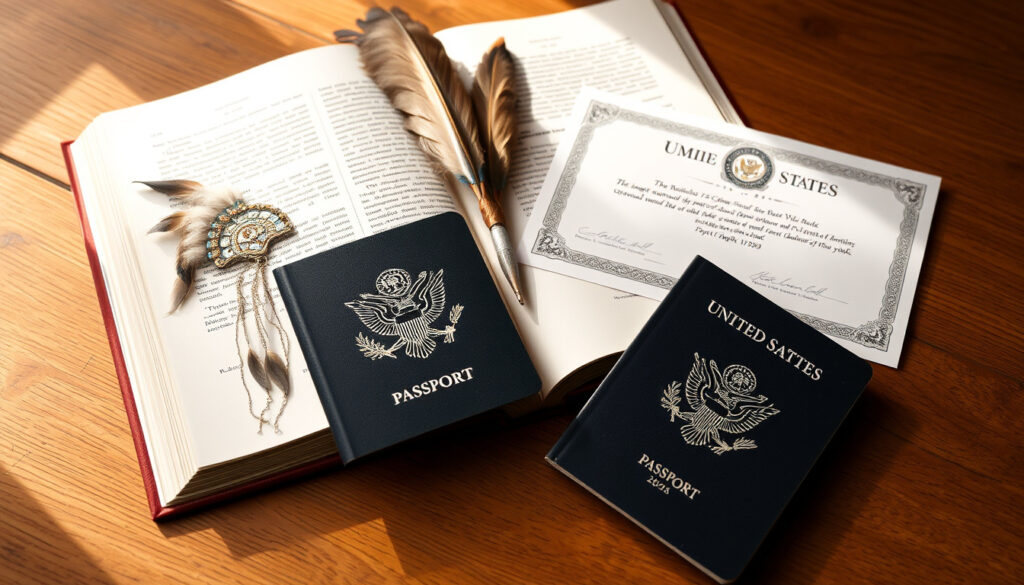
- The Indian Citizenship Act of 1924 granted US citizenship to all Native Americans born in the US (Bureau of Indian Affairs FAQ)
- Exact genetic admixture among Native American groups varies widely
- Origin of the term “49” in social dances is uncertain
- Blood quantum requirements for enrollment differ by tribe and change over time
- 1924: Indian Citizenship Act makes all Native Americans US citizens
- Today: 574 federally recognized tribes manage their own citizenship
- Tribal sovereignty continues to be tested in federal courts
- Enrollment criteria evolve as tribes update their constitutions
The key facts below show the scope of Native American identity in the US today.
| Label | Value |
|---|---|
| Federally recognized tribes | 574 |
| Native American population (2020) | 3.7 million |
| US citizenship granted | 1924 |
| Percentage off-reservation | ~80% |
| Top states by population | California, Oklahoma, Arizona |
Who is considered Native American in the US?
What are federal recognition requirements?
- Individual tribes set their own enrollment and citizenship requirements, according to the U.S. Department of the Interior (federal bureau for tribal affairs).
- Common membership criteria include lineal descent from someone on the tribe’s base roll, blood quantum, tribal residency, and continued contact with the tribe (DOI).
- The National Archives (federal record keeper) notes that the BIA is rarely involved in tribal enrollment today; tribes manage their own processes.
The pattern: there is no single federal definition of who is Native American. The government recognizes individuals only through membership in a federally recognized tribe.
How does tribal enrollment work?
- To determine eligibility, the DOI advises contacting the tribe directly (U.S. Department of the Interior (trace ancestry guide)).
- The National Indian Law Library (tribal law research center) confirms that tribes are sovereign and set their own rules.
- Some tribes, like the Citizen Potawatomi Nation, base enrollment on descendancy only: a biological parent must be an enrolled member (Citizen Potawatomi Nation (tribal government)).
The implication: anyone claiming Native American ancestry must start with genealogical research and then contact the specific tribe, because each tribe’s rules are unique.
What is the difference between being Native American and American Indian?
- The terms are often used interchangeably, but many individuals prefer “American Indian” or “Native American” based on personal or regional preference.
- The Bureau of Indian Affairs (tribal services arm of DOI) uses “American Indian and Alaska Native” in official documents.
- The Smithsonian Institution (national museum and research complex) notes that “Native American” is preferred in many academic and cultural contexts.
The trade-off: while the terms are legally equivalent, using the wrong label can signal disrespect. Ask an individual what they prefer.
Tribal identity is not a racial category—it’s a political and legal status. You cannot self-identify as Native American and expect federal recognition; you must be enrolled in a tribe that the US government recognizes.
What is the nationality of a Native American?
Do Native Americans have dual nationality?
- Yes. The Bureau of Indian Affairs (BIA FAQ) states that American Indian and Alaska Native people are citizens of the United States and of the states where they reside, and they can also become citizens of their tribes or villages as enrolled tribal members.
- This dual citizenship is a result of tribal sovereignty—tribal nations are distinct political entities with their own citizenship laws (National Indian Law Library).
So a Native American person holds at least two citizenships: US and tribal. Some tribes even allow membership in multiple tribes.
Does being a tribal member affect US citizenship?
- No. Tribal citizenship does not replace or restrict US citizenship. The National Archives clarifies that the BIA is not involved in determining tribal citizenship.
- The Indian Citizenship Act of 1924 granted US citizenship to all Native Americans born in the US, regardless of tribal membership.
The catch: some Native Americans did not want US citizenship because it was imposed without their consent, and for decades some states used it to deny tribal sovereignty.
Dual citizenship means Native Americans have rights and obligations in two sovereigns. For example, they can vote in both tribal and federal elections, but they are also subject to tribal laws on tribal lands.
Are Native Americans US citizens?
Yes, Native Americans are US citizens. The Bureau of Indian Affairs confirms that American Indian and Alaska Native people are citizens of the United States. This was not always the case: before 1924, many Native Americans were not US citizens. The Indian Citizenship Act of 1924 changed that by declaring “all noncitizen Indians born within the territorial limits of the United States be, and they are hereby, declared to be citizens of the United States.”
However, citizenship did not automatically grant voting rights. Some states continued to bar Native Americans from voting until the 1960s, using laws that required voters to be “civilized” or to prove they were not “under guardianship.” The implication: legal citizenship and full political rights are not the same thing.
What is a Native American tribe?
What is the difference between a tribe and a band?
- A tribe is a distinct sovereign nation with its own government, laws, and territory. A band is a smaller subgroup within a tribe, often based on kinship or geography.
- The BIA FAQ explains that both tribes and bands can be federally recognized, but the term “tribe” is more commonly used for larger nations.
How many tribes are federally recognized?
- As of 2024, there are 574 federally recognized tribal nations in the US (BIA).
- Each tribe has its own unique culture, language, and history. The Smithsonian Institution documents hundreds of distinct languages and traditions.
The pattern: tribal sovereignty means each of these 574 nations is a separate legal entity, not a subgroup of the US government.
Are Indians from India the same as Native Americans?
Why are Native Americans called Indians?
The name “Indian” for Native Americans originated from Christopher Columbus’s mistaken belief that he had reached the Indies in 1492. The Smithsonian Institution (national museum of Native American history) explains that the term stuck despite the error, and today many Native Americans embrace the term “American Indian” as a legal and cultural identity.
What are the genetic differences between South Asians and Indigenous Americans?
- Genetically, Native Americans are most closely related to ancient Siberian populations, not South Asians. Studies show that the closest living relatives to Indigenous Americans are the peoples of Siberia (Nature (peer-reviewed genetics journal)).
- Indians from India are genetically distinct, belonging to the South Asian haplogroup. The two groups diverged tens of thousands of years ago.
The implication: the name “Indian” is a historical accident, not a genetic or cultural link. Treating South Asians and Native Americans as the same is a common misconception.
The term “Indian” is legally enshrined in US law (e.g., Indian Citizenship Act, Bureau of Indian Affairs), but it causes confusion with people from India. Some Native Americans prefer “American Indian” to avoid this confusion, while others prefer “Native American” to emphasize their indigenous roots.
What does 49 mean to Native Americans?
A “49” is a social gathering or dance among Native Americans, often held after powwows. The Smithsonian National Museum of the American Indian (cultural authority) notes that the 49 dance is a contemporary tradition that emerged in the 20th century, not an ancient ceremonial practice. The origin of the term is debated: some say it refers to a specific year (1949) when a popular song was written, while others believe it comes from a type of song with 49 beats. What is clear is that the 49 is a social event focused on singing, dancing, and community bonding, often lasting late into the night.
Clarity: What we know and what we don’t
Confirmed facts
- Native Americans are US citizens and members of sovereign tribal nations.
- Federally recognized tribes are the primary legal framework for Native American identity.
- The term “Indian” for Native Americans originated from Columbus’s navigational error.
- 574 federally recognized tribes exist today.
What’s unclear
- Exact genetic admixture among different Native American groups varies substantially.
- Origin of the term “49” in the context of Native American social dances is uncertain.
- Blood quantum requirements for tribal enrollment differ and change over time.
Quotes from key sources
“All noncitizen Indians born within the territorial limits of the United States be, and they are hereby, declared to be citizens of the United States.”
— Indian Citizenship Act of 1924, National Archives
“Tribal sovereignty means tribal nations are distinct political entities with their own citizenship. Enrolled tribal members are citizens of both the United States and their tribal nation.”
— Native American Rights Fund (NARF), legal advocacy organization
“The American Indian and Alaska Native population alone or in combination was 3.7 million in the 2020 Census.”
“The term ‘Indian’ is a misnomer that has persisted for 500 years. Many Native people now use ‘American Indian’ or ‘Native American’ depending on context and personal preference.”
— Smithsonian National Museum of the American Indian, cultural authority
alaskabiaconference.org, ltbbodawa-nsn.gov, users.ssc.wisc.edu, wichitatribe.com, ncbi.nlm.nih.gov, wikihow.com, youtube.com
For a deeper look at the terminology and legal nuances, see this Native American definition and terminology guide that breaks down the key distinctions.
Frequently asked questions
What is the difference between a tribe and a reservation?
A tribe is a sovereign nation of people; a reservation is a land base that the US government set aside for a tribe. Not all tribes have reservations, and some reservations are home to multiple tribes.
Can a person be a member of more than one tribe?
Yes, if they meet the enrollment criteria of each tribe. Some tribes allow dual enrollment, but others do not. It depends on the tribe’s constitution.
Do Native Americans pay taxes?
Yes, Native Americans pay federal income taxes, state taxes, and local taxes. However, income earned on a reservation may be exempt from state taxes, and tribal members who live on reservations may have different tax obligations.
What does ‘blood quantum’ mean?
Blood quantum is a measure of the degree of Native American ancestry, often expressed as a fraction (e.g., 1/4). Some tribes use a minimum blood quantum to determine enrollment eligibility.
How many Native American languages are still spoken?
According to the Smithsonian Institution, around 150 Native American languages are still spoken in the US, though many are endangered.
What is a powwow?
A powwow is a social gathering featuring dance, music, food, and crafts. It is a celebration of Native American culture and heritage, open to both Native and non-Native people.
Are there Native American tribes in Alaska?
Yes. Alaska is home to many federally recognized tribes, including the Inupiat, Yupik, Aleut, and Athabascan peoples. The BIA recognizes 229 Alaska Native villages as tribes.
More related posts
 Stuart Townsend: Life after Charlize Theron split
 The Rainmaker TV Serie : Sea on 2, Ca t, Streaming Guide
 Voyage Organisé New York – Packages, Prices and Booking Guide 2025
 Winnipeg to Toronto Flights – Duration, Prices and Direct Options
 Elin Nordegren: Kids, Net Worth, and Life After Divorce
 Inter Miami vs New England: Latest Score, Preview & Lineups
 Tallest Man in the World: Records, History & Current Holder
 T20 World Cup 2026 Schedule: Dates, Venues, Teams & How to Watch